
Finding the right influencers for your indie game is one of the most effective ways to get visibility. Whether you are targeting YouTubers, Twitch streamers, or TikTok creators, building a relevant indie game influencer list is the first step to successful outreach.
In my previous guide, I covered how to build a relevant target media list. Building a strong creator or influencer list follows a very similar process. The goal is to find people who already cover games like yours, so your outreach feels relevant instead of random.
This is what makes the difference. A good list helps you focus on the right creators and gives you a system you can reuse for every future milestone.
In this guide, you will learn how to find the right creators for your game, how to evaluate if they are a good fit, and how to build a simple influencer list you can actually use.
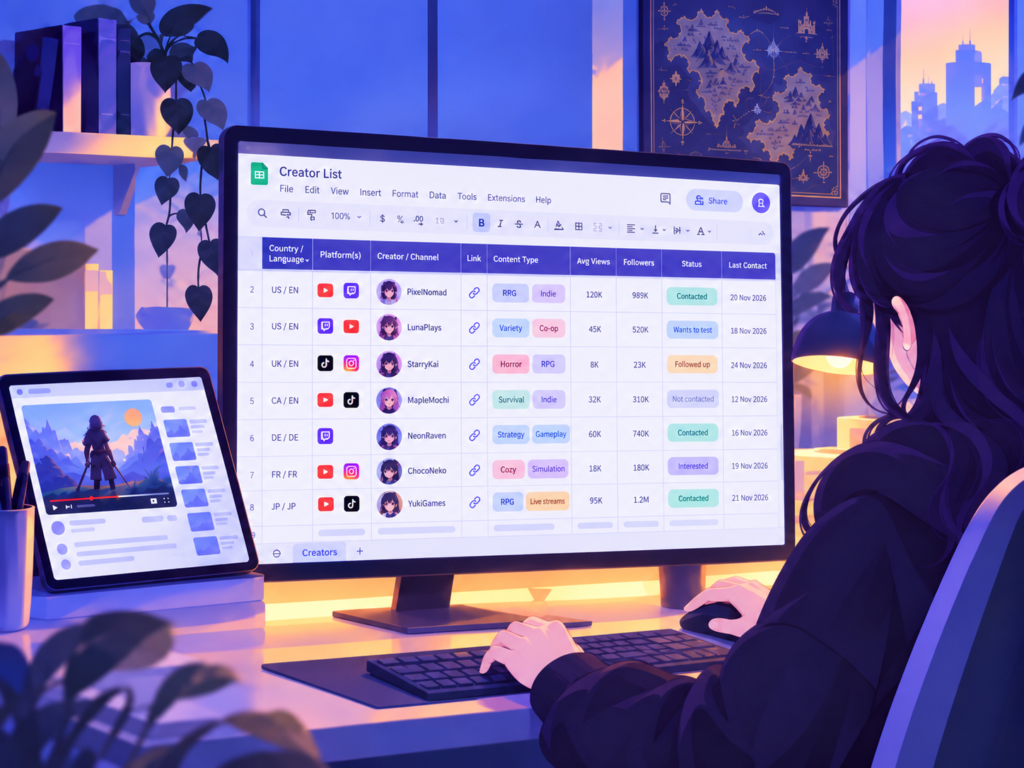
What should an indie game influencer list include?
Before you start searching for creators, it is important to set up a simple structure for your list. Just like with your media list, this is what keeps everything organized and makes your outreach much easier later. Without a clear structure, it becomes difficult to track who you contacted, who is a good fit, and what kind of content they create.
Your influencer list does not need to be complex. A simple tracker with the right columns is enough to get started and will already put you ahead of most teams.
Before going into each column, it helps to understand how the list works. Your influencer list follows a simple flow:
- Who the creator is
- Where they are active
- Whether they are a good fit
- How to contact them
- What to track over time
Here are the key things you should include in your indie game influencer list.
Channel name and link
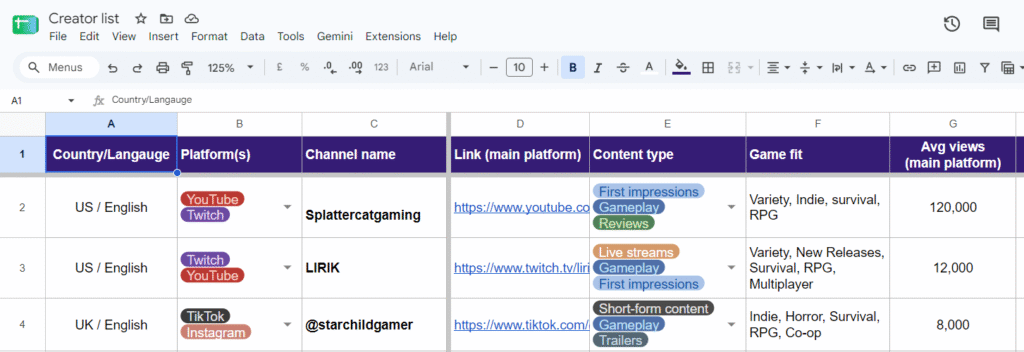
Start with the basics. Add the creator’s channel name and include a direct link to their main platform. This makes it easy to quickly access their content, check recent uploads, and refresh your understanding before outreach. If a creator is active on multiple platforms, link to the one where they perform best. This keeps your list focused and avoids confusion later. Keeping this consistent will save you time as your list grows and makes it much easier to review creators at a glance.
Platform
Note where the creator is active. For example: YouTube, Twitch, TikTok, or a mix of platforms. This helps you understand what type of content they create and how your game might fit. A YouTube creator might focus on longer gameplay videos or reviews, while TikTok creators often create short, fast paced clips. If a creator is active on multiple platforms, just include them. Focus your evaluation on where they perform best.
Country and language
This helps you plan your outreach more effectively. You will know what language to use, but also when to reach out. Creators do not follow strict working hours like journalists, but they still have active periods when they check messages and plan content. As a simple rule, aim to send your message during the day in their local time, ideally before their usual content creation or posting window. This becomes even more important when working across multiple regions or planning a coordinated push around a demo, update, or launch.
Content type
Not all creators make the same kind of content. Some focus on first impressions, full playthroughs, highlights, reviews, or short form videos. Write this down so you know what kind of coverage to expect. This is important when you pitch. A creator who mainly does quick first impressions will not approach your game the same way as someone who records long series.
Game fit
This is one of the most important columns. Note what kind of games the creator usually covers. Genre, style, tone, or player experience. For example:
- Indie horror
- Cozy games
- Simulation or management
- Story driven games
The closer the match, the higher the chance they will be interested.
Average views
Follower count can be misleading. What matters more is how many people actually watch the content. Look at average views on recent videos or streams to get a more realistic idea of reach and potential impact.
To calculate it manually, open the creator’s last 5 to 10 videos and note the view counts. Add them together and divide by the number of videos. For example: 10K + 12K + 8K + 15K + 10K = 55K, divided by 5 = 11K average views. This gives you a useful benchmark when comparing creators. If you want to skip the manual counting, a tool like Social Blade can help you assess recent channel performance and view trends.
Followers (optional)
You can include follower count, but treat it as secondary. It can be useful for quick context, but it should not be your main decision factor. Smaller creators with strong engagement often perform better than large accounts with low activity.
First name (optional)
If available, add the creator’s first name. This helps you personalize your outreach later and makes your message feel more direct.
Contact
Add the best available contact method. Many creators list a business email, while others respond faster via their social media. If possible, prioritize email, but always adapt to how the creator prefers to be contacted.
Notes
This becomes one of the most valuable columns over time. Add short observations like:
- Covered [Game X]
- Focuses on indie horror
- Strong engagement on short form content
- Prefers early access builds
These notes make your outreach much easier later and help you personalize without starting from scratch.
Status
This is your main tracking column. Use it to track where each creator is in your outreach process. For example:
- Not contacted
- Contacted
- Followed up
- Replied
- Covered
- No response / not interested
Keeping this column current makes it much easier to manage your outreach and quickly see what needs to be done next.
Extra columns
You can expand your tracker based on your needs. For example:
- Last contact date
- Follow up
- Response
- Coverage link
Start simple and add more as you go. It is better to build a tracker you actually use than an overly complex one you abandon.
How to find influencers for your game
There are tools and AI that can help you discover creators faster, but the best results still come from combining them with manual research. You want to find people who already make content around games like yours, not just anyone with a large audience.
You can also check my guide on using AI for a faster research workflow. But I would still spend some time manually checking channels, recent videos, and whether the creator is genuinely a good fit for your game.
Step 1: Find similar games
Start by selecting 3 to 5 games that are similar to yours. These games will act as your reference points to find relevant creators. Look for games that match your genre, style, tone, or player experience. Try to choose titles that are close in scope as well. If you only compare your game to very large hits, the results may not be as useful. Also, aim to select games that were released within the last couple of years or are about to release soon. This helps you find creators who are still active in that space.
Step 2: Search on platforms
Now take those games and start searching for influencers on content platforms like YouTube, Twitch, and TikTok.
YouTube
Start by searching for the exact game name. You can also try simple variations like:
- Game name + gameplay
- Game name + review
- Game name + demo
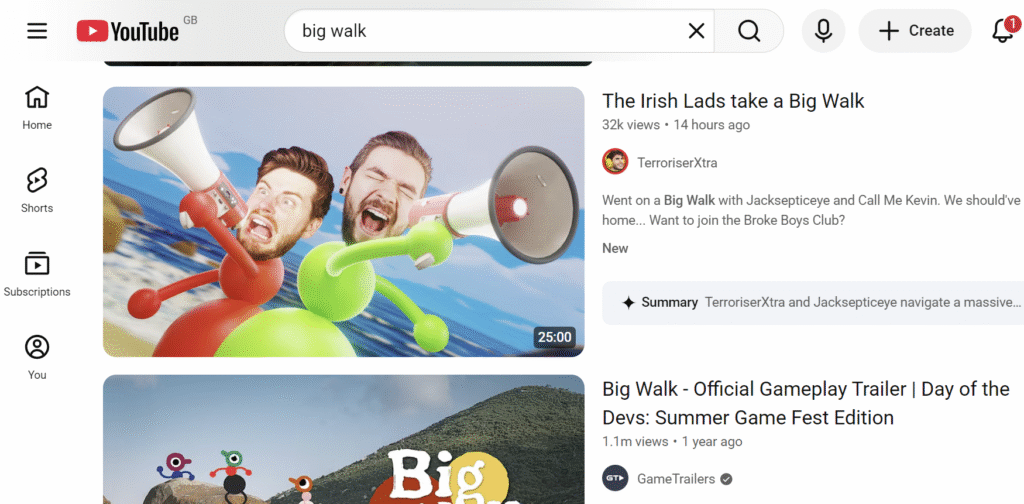
Use filters to sort by views so you can quickly find creators whose videos performed well, not just recent uploads. Open the videos one by one and check the channels. Look at:
- How active they are
- What kind of games they usually cover
- Whether their content feels relevant to your game
After a quick evaluation, add the most relevant creators to your list and fill in their details for future reference. You will start seeing the same creators appear across multiple games. These are often your most relevant contacts.
Twitch
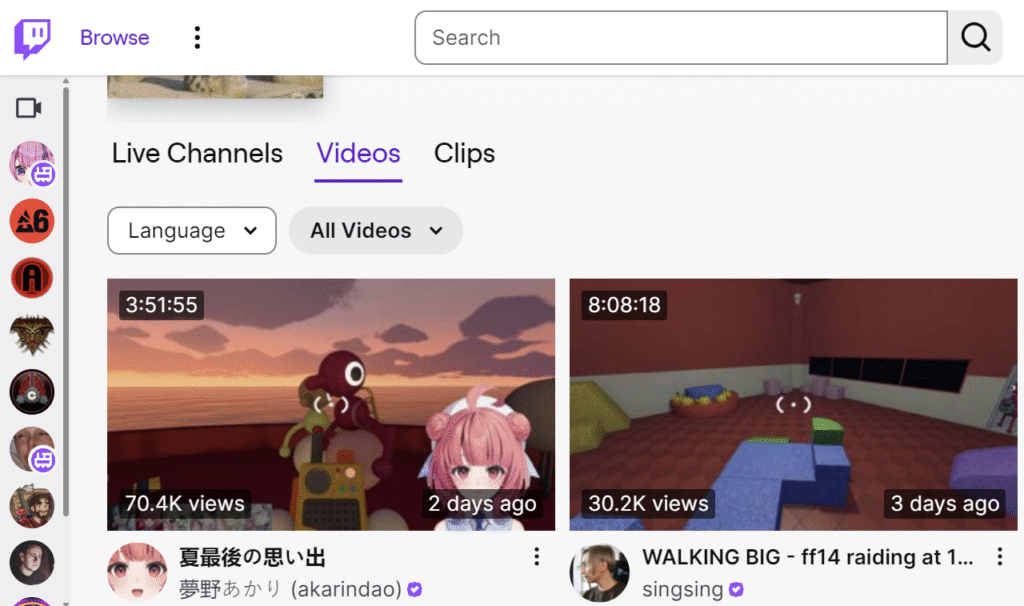
On Twitch, the process is slightly different. Search for the game and open its category page. There you will see live channels currently playing it. If the game is not very popular, there may not be many live streams. In that case, switch to the Videos section and sort by views. This helps you find creators who previously streamed the game and had strong engagement. You can also filter by language if you want to target specific regions. Open their profiles and check if they are still active. Then look for contact details in their profile, or through linked platforms like X or YouTube. Add only the creators who feel relevant to your game.
TikTok
Search for the game name using hashtags and browse the videos. TikTok has limited filtering, so the process is more manual. Scroll through results and open creators who:
- Covered similar games
- Have solid view counts
- Feel like a good fit for your game
Some creators include an email in their bio. If not, you can reach out via DM.
Pro tip: In addition to searching specific games, try broader keywords based on your genre. For example: “indie horror game,” “cozy game,” “simulation game.” This can help you discover creators who may not have covered your reference games but are still highly relevant.
Step 3: Build your influencer list
Go through the creators you found and add the relevant ones to your list. Include creators who feel like a strong fit based on:
- The type of games they cover
- How active they are and how recently they posted
- Whether their content and audience feel relevant to your game
- Their average views for context, not as a requirement
For each creator:
- Add their name and channel link
- Note the platform and content type
- Estimate average views
- Include contact method
- Write a short note like “Covered [Game X]”
This becomes very useful later. When you reach out, you can reference their previous content and clearly show why your game fits their channel. Over time, this list becomes a reusable asset for every future milestone.
Step 4: Repeat and build over time
Keep going until you have a solid pool of relevant creators. You do not need hundreds before you start outreach, but do not stop once you find a small number of perfect matches either. The goal is to build as large a list of genuinely relevant creators as you reasonably can. Start with what you have, test your outreach, and keep expanding the list over time. Do not wait to build a perfect list before reaching out. Start early, learn what gets responses, and expand your list as you go. Over time, this becomes a system. Each time you launch a new demo, update, or game, you already have a strong base to work from. Keep updating your list as you go:
- Remove inactive creators
- Add new ones you discover
- Note who responded or created content
This turns your list into a living asset, not just a one time task. Now that your list is starting to take shape, it is worth avoiding a few common mistakes that can limit your results.
Common indie game influencer list mistakes
Yes, that is clearer and more consistent with your point. I’d only smooth it slightly:
A strong influencer list needs both relevance and enough volume. The goal is to collect as many genuinely relevant creators as possible, increasing your chances of getting more of them to play and create content around your game. Some of the most common mistakes are:
- Choosing creators based only on follower count. Do not dismiss smaller or mid-sized creators. When your game is still unknown, every relevant creator willing to talk about it can help build awareness.
- Not checking recent activity. Make sure the creator is still active, still covers games like yours, and that their contact details are current.
- Ignoring content fit. A creator can have the right audience size but still be a poor match if your game does not fit the type of content they make.
- Using the wrong contact method. Check whether they prefer email, a business form, Discord, or another channel before reaching out.
- Sending the exact same pitch to everyone. Even a small amount of relevant personalization can make your message feel much more intentional.
- Treating the list as a one-time task. After every campaign, update who replied, who created content, what worked, and who might be useful again.
Over time, your influencer list becomes one of your most useful PR assets because every campaign makes the next one easier. Build it once, keep improving it, and keep expanding it with relevant creators.
Subscribe for more practical tips and download the free influencer list tracker to start building your own list today.