
So you are ready to contact the press. You have a press release or want to pitch a review code. But who do you actually contact? It can feel overwhelming with all the gaming websites, blogs, and creators out there. Random pitching does not work. If you want replies and real coverage, you need a curated indie game media list and a simple tracker. This guide will show you exactly how to build a media list for your game and how to find the right journalists and creators.
What should an indie game media list include?
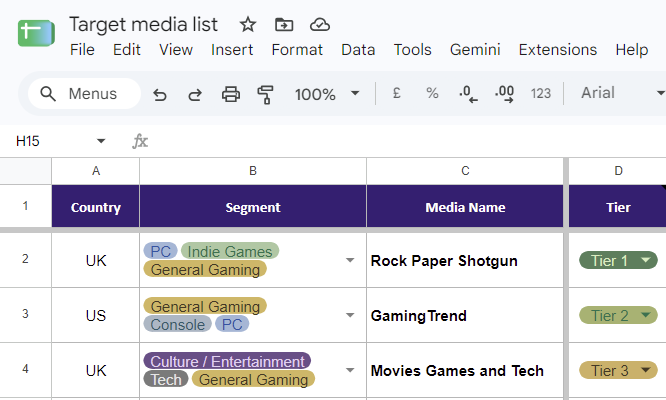
Before we go into how to find the right contacts, I want to share a structure of columns I include in my PR work to have useful information about the media I am reaching out to. It does not mean you have to include everything, especially if you are short on time. It is not about the perfect list, it is about making it useful for you not only in this moment but for the future milestones and campaigns.
Here is what I like to include in my indie game media list:
Country and language
This is important for two reasons. First, you need to know which language to use. English will often work, but if you want to increase your chances of getting covered, localizing your press release can make a big difference. Second, timing matters. Think about what time it is in that region. If you send your email at midnight, it will likely get buried. You want your email to land when they are actually working. As a simple rule, aim to send emails in the morning of their local time, when journalists are starting their day and checking inboxes.
Media name
Simple but important. Always include the media name so you can track who you contacted and who covered your game. It also helps you quickly avoid duplicates and keeps your outreach organized, especially when you start working with larger lists. If possible, keep naming consistent. For example, do not mix variations of the same outlet name, as this can make tracking messy later.
Segment
This becomes very useful over time. Write down what each outlet focuses on. Some only cover specific genres, platforms, or types of games. For example, if a site mainly covers strategy or Xbox games, note that down. This helps you avoid irrelevant pitching and makes your outreach much more targeted. You can also go one step further and note the type of content they publish. Some outlets focus on reviews, others on news, features, or indie highlights. This helps you match your pitch to the right angle. Over time, this column becomes one of the most valuable in your media list, especially when you start reusing it for different games or milestones.
Tier
Divide your media into three tiers:
- Tier 1: Top global or national outlets with the highest influence
- Tier 2: Large and well known outlets with strong reach
- Tier 3: Smaller or niche outlets with more focused audiences
This helps you prioritize your outreach and time. Tier 1 media should always be contacted personally (and first), especially if you are offering exclusives or important announcements. These outlets require more tailored communication and usually more preparation. Tier 2 and Tier 3 are often where you build early momentum and secure more coverage. They are generally more accessible and can help create visibility around your game before or alongside bigger outlets. You can also use tiers to plan your rollout. For example, start with Tier 1 for exclusives, then expand to Tier 2 and Tier 3 for wider coverage.
Monthly visitors
This gives you an idea of potential exposure. When you get coverage, you can have a rough idea how many people may have seen your game and understand the relative impact of each outlet. You can check this using tools like Similarweb or Hypestat. Keep in mind these numbers are estimates, not exact traffic. They are best used to compare outlets and understand scale, rather than measure precise results. Over time, this also helps you evaluate which types of media bring the most value and adjust your outreach accordingly.
Name and contact email
Create separate columns for:
- First name
- Last name (optional)
- Email address
- Role (optional)
Keeping these separate helps if you later import your contacts into a CRM or outreach tool. If possible, always prioritize finding the direct journalist contact rather than using a general press email. Personal emails usually lead to much higher response rates. Also make sure the contact matches the content you are pitching and, if possible, add a role of the contact. For example, a review editor, news writer, and features editor may all work at the same outlet, but they cover different things.
Link and about section
Add a column with the link to the outlet so you can quickly access their site and check their latest coverage. Also include an about or notes column. Use it to write things like:
- What they usually cover
- Preferred genres
- Type of content
You can also add quick observations, such as tone, audience, or anything that stands out. This helps you tailor your pitch more naturally. Over time, this becomes one of the most valuable parts of your media list. When you come back for a new game or milestone, you already have context and do not need to start from scratch.
Extra columns
You can expand your tracker based on your needs. For example:
- Genre
- Platform
- Type of coverage
- Status
- Notes
- You can also add columns like:
- Last contact date
- Response
- Coverage link
These become especially useful once you start doing outreach and need to track follow ups and results. Start simple and add more as you go. It is better to build a tracker you actually use than a complex one you abandon.
How to find game journalists and creators
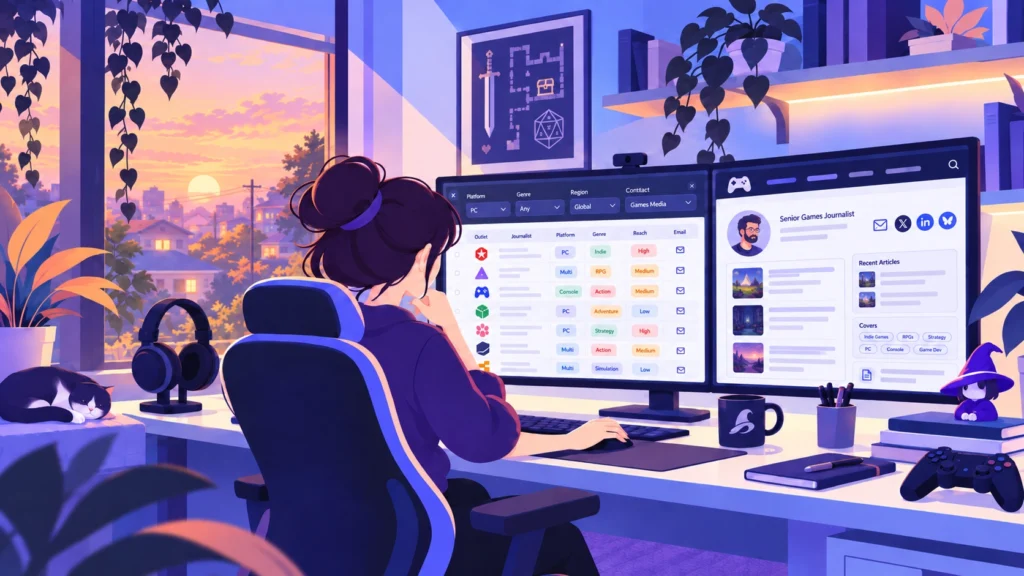
This is the most important part of building a strong indie game media list. Manual research is still the best way to make sure your contacts are actually relevant. Tools and AI can speed things up by helping you discover outlets, suggest journalists or creators to check, summarize recent coverage, and organize large amounts of information much faster. But treat AI as a shortcut for research, not a replacement for it. Always verify that the person is still active, that they actually cover games like yours, and that the contact details are current.
Step 1: Find similar games
Pick three to five games that are similar to yours in genre, style, audience, and ideally scope. Try to choose games that are realistically comparable to your project, because if you only look at very large titles, the results may not be as useful.
That said, it is still worth researching one or two bigger games too. Larger titles often get covered by a much wider range of outlets, including media that do not usually focus heavily on that specific genre. This can help you discover additional journalists and publications you might otherwise miss. Just keep in mind that those contacts may be much harder to secure coverage from for a smaller indie game.
A good shortcut is to look at a mix of recently released games and a couple that are launching soon. Recent coverage is more likely to lead you to journalists and creators who are still active, while upcoming comparable games can also show you who is covering that space right now and what other developers are doing around launch.
Step 2: Search for coverage
- Search the exact name of the game
- Select a region or language, aim for at least five key regions
- Set the timeframe to the last twelve months
This helps you find recent articles and active journalists who are still covering that space. You can also make your searches more specific by adding the type of coverage you are looking for next to the game name. For example, searching “game name” + demo is more likely to show you who actually covers demos, rather than assuming every outlet that covered a launch or review will also be interested in a demo announcement.
You can do the same with terms like review, release date, preview, interview, Steam Next Fest, or early access. This can surface more relevant coverage and smaller outlets that may not appear in broader searches.
Step 3: Build your media list
Go through the search results and open articles about those games. For each article:
- Check who wrote it
- Find their contact details
- Add them to your media list
- Also add a note like “Covered [Game X].”
This becomes very powerful later. When you pitch, you can reference their previous coverage and clearly show why your game is relevant to them. If you cannot find an email, check the author’s profile page, social media, or the outlet’s contact section. In some cases, a general editorial email can still work, but direct contacts are always stronger. Over time, you will start building a list of journalists who already cover games like yours, which makes every future outreach more effective. Now that your list is starting to take shape, it is worth avoiding a few common mistakes that can limit your results.
Common indie game media list mistakes
Common mistakes to avoid
- Making the list not targeted enough.The more relevant people you have on your list, the more chances you create for the right pitch to land at the right time.
- Building a list that is too small. You will often hear that a small, highly targeted list is better than a big one, and I agree with the targeted part. But from my experience, even highly relevant journalists may be too busy or simply not interested at that particular moment. Aim for as many relevant contacts as you can reasonably find. The larger your relevant pool, the better your chances of securing more coverage.
- Not checking what a journalist actually covers. Before adding anyone, look at their recent articles. Make sure they still write about indie games, your genre, or the kind of story you are pitching.
- Using outdated contacts. Journalists change roles, outlets, and coverage areas all the time. Prioritize people who are active now, not names copied from old databases or past campaigns.
- Focusing only on top tier outlets. Big names matter, but Tier 2 and Tier 3 media often have more room for indie games and can be just as useful, sometimes more. If you are an unknown studio or developer with a game that has not built much awareness yet, the chances of Tier 1 coverage are quite low, so do not build your whole strategy around them.
- Not tracking outreach properly. Keep clear notes on who you contacted, when you reached out, how they responded, and what happened next.
- Copy pasting the same pitch to everyone. It usually shows. A little personalization goes a long way and gives you a better shot at getting a reply.
- Treating your media list as a one off task. Keep updating it after every campaign so the next round is sharper than the last.
A strong indie game media list is never really finished. Build it once with the fields above, then keep improving it with every campaign. Subscribe for more practical PR tips and download the free target list tracker to start building your own list today.